
By Extreme Plumbing & Rooter · Cover image is illustrative.
The sewer was cleared a month ago. Now the toilet bubbles when the washer drains, and the shower pan fills again. If a cable got the line moving last time, the next visit should answer a different question: what stayed behind, and where is it getting in? The answer determines whether another cable pass, hydro jetting or a repair makes sense.
For Sherman Oaks, North Hollywood and Van Nuys homes with recurring backups, the decision starts with evidence from the line. A mature tree gives you a reason to look. A camera view of roots entering a specific joint gives you a place to act.
How can you tell whether roots are in the main sewer?
A single slow sink often points toward that fixture or a branch. If the toilet gurgles when the washer empties, or water rises in the lowest shower when another fixture drains, the shared line deserves attention. Those symptoms show how the blockage affects drainage. Grease, an object, a broken section or roots can all create similar symptoms.
Before the visit, write down which fixture showed trouble first, what else was running, and when the sewer was last cleared. If you have an invoice from that visit, look for notes about footage, root material on the cable head or the location of the blockage. A homeowner who can say “the cable brought back roots twice in six months” gives the technician a much better starting point than someone who can only report a slow drain.
If wastewater is backing up indoors, stop using water and keep people and pets away from the affected area. Call for help. A yard cleanout that is holding wastewater can release it when opened, so leave that access point to the technician. If the problem is confined to one fixture, start with our guide to when snaking is enough.
Where do roots enter an older lateral?
The lateral carries wastewater from the property toward the public sewer. Roots can grow into openings at separated joints, cracks or deteriorated connections. Older segmented clay lines have joints to inspect. Cast iron can have deteriorated sections or transitions that also deserve a look. A property might have a newer plastic repair connected to an older lateral farther down the yard. The first few feet of clear plastic seen on the monitor tell you little about that downstream connection.
Think of a North Hollywood bungalow with a shaded parkway and a repaired section beside the house. Roots visible at the next clay joint may matter more than the tree directly overhead. Another yard might have roots at multiple joints and a section where water stands after fixtures are off. Those two examples can have the same symptom and very different scopes. The tree species and the time of year are weak substitutes for inspecting the line.
When should a camera come before cleaning?
When an accessible line is open enough to see, footage can help decide whether aggressive cleaning is appropriate. If the pipe is full of wastewater or blocked by a dense mat, the camera may show little or may stop short. In that case, a technician can restore enough flow to inspect, then choose a cleaning head or repair plan based on what is visible. Ask for another view after clearing if the first view was obscured.
Watch for three things on the monitor: where the obstruction starts, whether the camera reaches the far side, and what the pipe wall looks like after the obstruction comes out. Ask the technician to mark the suspect point above ground when a locator signal is available. That helps distinguish a shallow joint by a lawn from a deeper defect under a driveway. See our camera inspection service for what a visit can document.
When does a cable make more sense than a jetter?
A motorized sewer cable rotates a head through the line. A small head can open a path through soft material. A larger root cutter may remove more growth when the pipe size, access and condition allow it. The advantage is practical: if a house has an active backup and the line is too full for useful video, a controlled opening can restore drainage and let the technician get a view.
Ask what tool was actually used. “We snaked it” can describe a small branch cable or a professional main-line machine with a cutting head. If the previous technician only opened a small channel, there may still be root growth along the wall. If a proper cut already removed the material and backups keep returning at the same joint, focus on the opening in the pipe and the time between visits.
When is hydro jetting the better cleaning option?
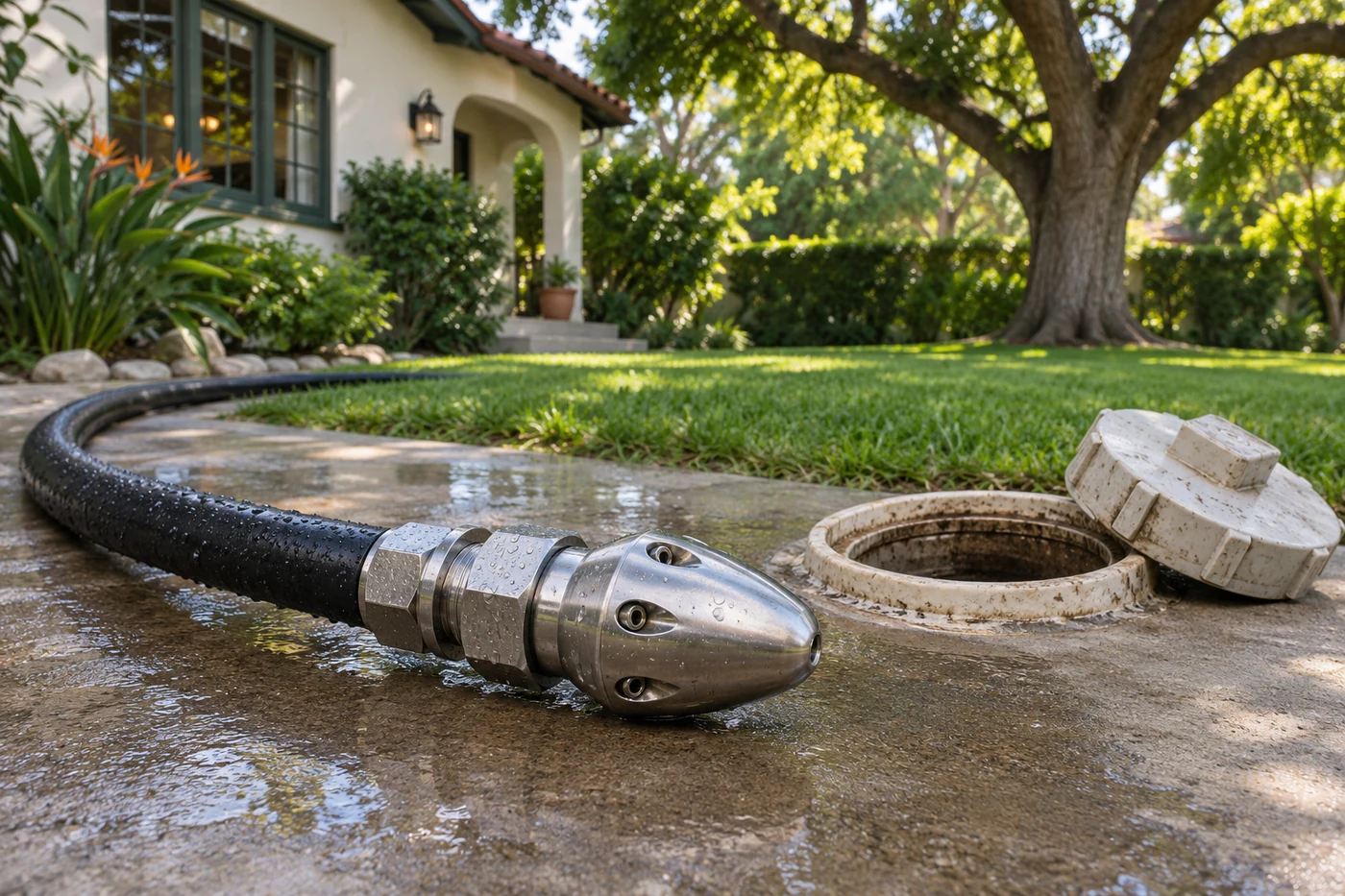
A jetter uses controlled high-pressure water and a nozzle selected for the pipe and material. It can remove residue around the wall and flush loosened material downstream. A suitable root-cutting nozzle can tackle some root growth. Dense woody roots may call for another cutting method. If the footage shows a severe offset, missing pipe wall or collapse, the technician may limit cleaning and discuss repair. The right setting depends on what the pipe can safely tolerate.
| What the visit finds | What to discuss |
|---|---|
| One isolated fixture clog | Start with the affected branch and a fixture-appropriate tool. |
| Backed-up main, camera view underwater | Restore flow where feasible, then inspect before choosing further work. |
| Fine roots and wall buildup in a serviceable lateral | Compare a root-cutting cable with jetting, then look at the cleared section on video. |
| Roots reappear at a visible failed joint | Compare maintenance against a localized repair or rehabilitation. |
| Major offset, collapse or severe standing water | Locate the obstruction and price the structural correction. |
In a Sherman Oaks home with usable access, fine roots and grease may be good reasons to discuss hydro jetting together. Across the street, a damaged lateral with the same frequency of backups may need a different plan. Ask what the contractor expects to remove, where the material will go, and what footage you will see when the work is done.
How much does root cleaning cost?
Angi’s Los Angeles hydro jetting guide reports a common range of about $400 to $680 for its mix of projects. A separate Los Angeles contractor’s guide lists $900 to $2,400 for main-line or severe-buildup jetting. The scopes differ, especially where a blocked main takes more setup or work. Use the numbers for planning. Extreme quotes the work after assessing the line.
Get a price for opening the line, cleaning the affected run and recording follow-up footage. Ask whether the cleanout is usable and what access costs if it needs to be added. A comparison between an introductory cable price and a quote that includes locating, jetting and video tells you very little until both contractors describe what you get for the price.
If cleaning worked for years, a maintenance approach may be reasonable. If you are paying for several visits in a short period, ask what each option buys you over the next year. Use actual visit dates and bills, plus the risk of cleanup if sewage backs up inside. A recurring problem under a walkway could warrant a spot-repair quote alongside trenchless replacement or scheduled cleaning.
Can you keep roots from coming back?
Keep the footage and the distance from the cleanout so the next visit can compare the same section. If you opt for maintenance, base the follow-up on how fast the obstruction returned and the condition of the pipe. There is no universal schedule for every yard. Avoid putting grease and wipes into the system, since buildup can compound the same restriction. Before major landscape work near a known lateral, locate the pipe and talk through planting with an arborist or landscaper.
A repair can close the defect that allowed roots into the treated section. Other aging joints may still need monitoring. Ask which portions the proposed work addresses and what will remain in service. For help interpreting the video, read our guide to sewer camera findings and trenchless options.
Frequently asked questions
Will hydro jetting permanently stop tree roots?
Jetting can clear roots from a suitable pipe. The opening that allowed the roots in may remain, so regrowth is possible unless the defect is repaired.
Can you jet an old clay sewer?
Some older clay lines can be cleaned this way. The recommendation depends on visible pipe condition, access, root severity and the technician’s choice of nozzle and pressure.
Should I cut down the tree over the sewer?
Start with a camera and locate the entry point. Removing a tree can have property and permitting implications, and the lateral still needs evaluation if it has an opening.
Does a free inspection include recorded camera footage?
Ask us when you book. Equipment-based diagnostics, opening a blocked line and creating access can have separate pricing, which we’ll discuss before work begins.
Find out why the backup returned
Extreme Plumbing & Rooter serves Sherman Oaks, North Hollywood, Van Nuys and nearby communities. Call 818-631-7296 or request a free inspection. Tell us when the line was last cleared and whether you have footage. We can talk through rooter service, camera access and jetting before you approve work.