
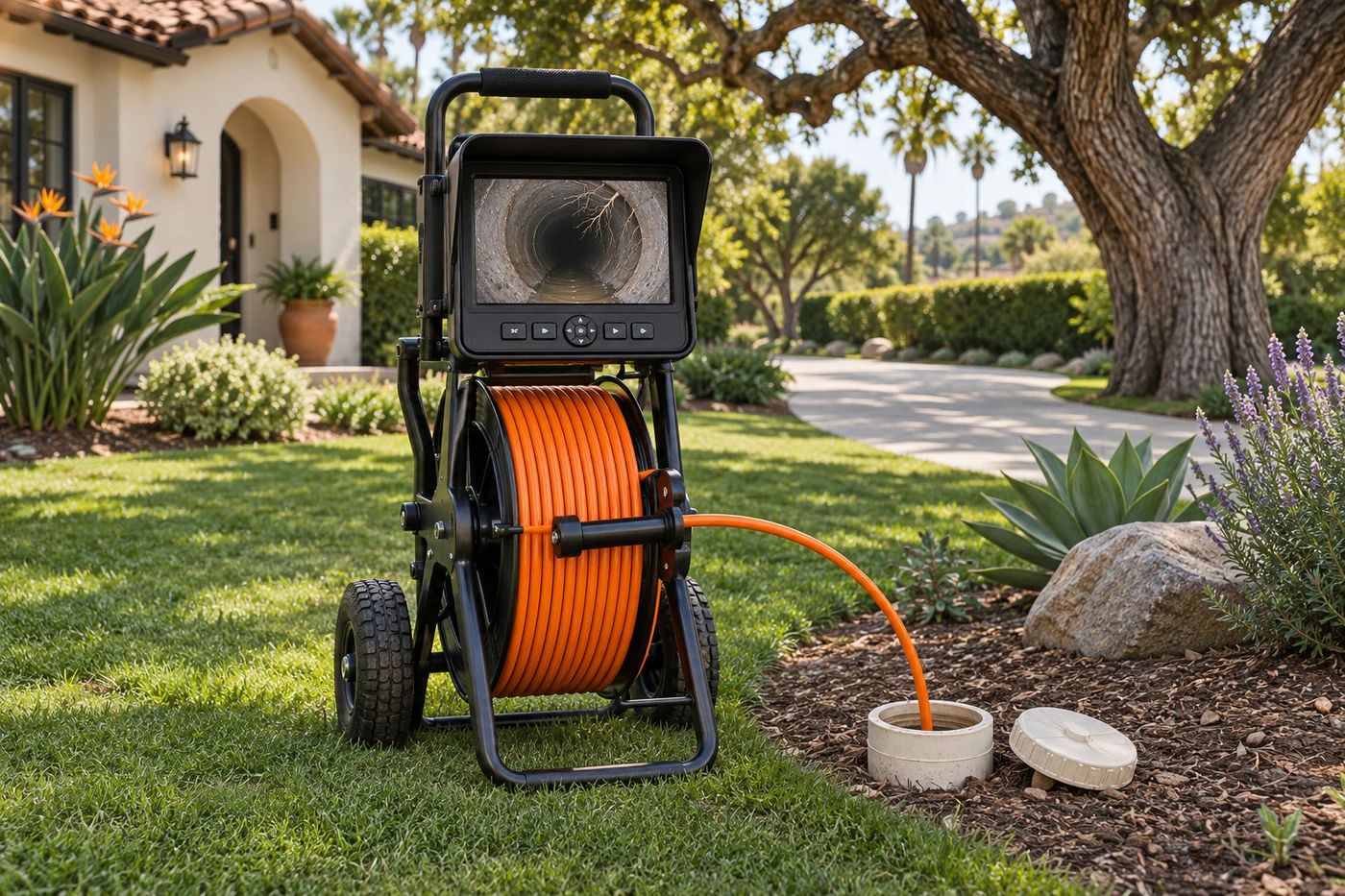
By Extreme Plumbing & Rooter · Cover image is illustrative.
A sewer video pauses on a dark patch. Someone says the line needs replacing. Before you approve a job that could cross your driveway, ask the technician to play that section again and show you three things: what the camera sees, how far it is from the entry point, and where that places it above ground. A useful inspection connects the picture to the property and explains how the finding changes the repair.
In Van Nuys, the question might be whether a recurring backup comes from a joint near the front walk. In Calabasas, it might be whether a long run beneath a paved drive can be replaced with small access pits. A clear recording helps answer both. The footage has limits, especially if the line is blocked or the camera is underwater.
When is a sewer camera inspection worth scheduling?
Schedule one when the same shared line keeps backing up, a previous clearing pulled out roots, or you are considering a repair and want the proposed scope documented. It can also be useful before buying an older property or adding a bathroom or ADU, since the existing lateral’s route and condition affect what you can reuse. If the issue is a single slow fixture or a dry trap with an odor, the first step can be an ordinary plumbing diagnosis.
Watch the lowest fixtures. If running the washer makes water rise in a downstairs shower or several drains fail together, the shared waste line deserves attention. If sewage is already backing up indoors, stop using water, avoid contact with the affected area, and call. The first priority may be restoring safe drainage so the camera can see. A warm floor or a meter that moves when water use has stopped may involve a different system. Ask about supply and slab leak detection for those symptoms.
What should happen during a camera visit?
- Identify the entry point. The technician looks for a usable cleanout and explains what part of the system can be reached from it. Access through another opening or adding a cleanout may change the scope.
- Get a view of the line. A lighted camera head travels on a push cable. The technician watches the video, notes material transitions and flags defects. If wastewater, buildup or an obstruction hides the pipe, ask whether clearing and a second pass would help.
- Locate important findings. When conditions allow, a transmitter in the camera head and a surface receiver help mark the suspect area and estimate depth. Cable footage is distance traveled along the pipe. It can differ from a straight line drawn across the yard.
- Review the findings together. Ask how far the camera reached, where it stopped, which sections were visible, and which finding explains the symptom. Keep the recording and marked locations if available.
For a Northridge purchase or a Calabasas house with a long driveway, ask whether the report identifies the starting access point, direction, footage and any inaccessible section. If the camera stopped at 42 feet and the lateral continues, the remaining section is unassessed. Get that distinction in writing before comparing bids.
What does the footage actually show?
| Camera finding | What to ask next |
|---|---|
| Roots entering at a joint | Can we see the joint after clearing? Has intrusion returned at the same point before? |
| Crack or offset joint | How wide is the visible defect? Can the camera pass? Does material catch there? |
| Rough buildup or corrosion | Can we distinguish deposits from damage after cleaning a suitable section? |
| Standing water or suspected belly | Does it remain after flow stops and the line clears? What additional grade measurements are needed? |
| Suspected collapse or blocked passage | What is visible at the stop, and can a second access point or surface locator narrow it down? |
A belly is a low section where water can collect. Footage can show the camera entering and emerging from water. Backed-up water can obscure the same view, so ask what supports the diagnosis and whether a grade check is needed. The camera sees inside the accessible pipe. It cannot independently confirm soil conditions, property ownership or whether every hidden joint is watertight.
For example, a few roots at one joint near a Van Nuys walkway might call for targeted clearing and a second look. In a different house, the camera may show multiple separated joints under pavement. That supports discussing a longer repair. In either case, ask to see the defects the proposed work will address and what the video says about the rest of the run.
When does trenchless make sense?
Pipe bursting pulls a replacement pipe along the old route as a bursting head fractures or displaces the host pipe. It typically needs access at the ends and may require additional excavation for connections, obstructions or utility conflicts. For a Calabasas yard with finished paving, compare where the pits would go and which surfaces would need restoration.
Cured-in-place lining uses a resin-impregnated liner that hardens inside a prepared host pipe. It can be an option for certain cracks or joints where the condition, size and access make lining viable. It follows the existing alignment, including a significant low point if present. Discuss how any branches would be handled and which lining methods, if any, are available for the specific job. See NASSCO’s overview of pipe rehabilitation methods.
Excavation gives direct access to repair a localized defect or rebuild a section where grade must be corrected. A short dig in a planting bed can make more sense than lining the entire lateral. On a larger job, a combination of trenchless work and a targeted excavation may protect most of the yard while fixing the part that needs a new slope. Ask our trenchless sewer replacement team which options are feasible at your address.
How much will the camera and repair cost?
For planning, one published Los Angeles contractor guide lists $300 to $700 for camera inspection with a report and $23,000 to $56,000 or more for its trenchless replacement category. Those are that contractor’s published ranges. A short private-side spot repair and a long replacement involving pavement or the public right-of-way are different jobs. Extreme prices the actual access, pipe length and repair scope after assessment.
Ask what the camera service includes: access, a recording, locating and a written recommendation can be separate items. For repair, ask for pipe length, method, locations of access pits, permits, testing, post-work video, backfill and restoration. If an estimate says “restore driveway,” find out whether it covers only the cut or a larger matched finish. A lower pipe price can come with more restoration work for you to arrange.
Before repair, confirm who maintains the affected segment and which agency handles approvals at the address. For work involving a public sewer connection in Los Angeles, see the City’s S Permit guidance. For Calabasas projects, consult the City’s sewer system management information and confirm the applicable city or sewer agency requirements and whether work crosses a property line, easement or public right-of-way. Ask who will pull permits and schedule inspections.
How do you compare two proposals from the same footage?
Ask both contractors to identify the same start and end points. One may quote from the house cleanout to the first failed joint. Another may quote all the way to the public connection. Then compare what each expects to find at the far end, how each plans to reconnect the new work, and which parts of the existing system stay in service. If one proposal includes a longer section, ask which additional defects or access constraints justify it. Bring the marked route and the video to the discussion so you can tie each line item to something on the property.
What should you have when the work is finished?
Keep the original recording, the signed scope, permit records if applicable and footage of the repaired run when part of the job. Ask to see the connections and have the crew point out the cleanout you’ll use in the future. If only one section was replaced, have the estimate or report identify its endpoints. For recurring roots where maintenance is still a reasonable option, see our root cleaning and hydro jetting guide.
Frequently asked questions
Can the camera inspect the whole line while it is backed up?
Sometimes it can reach the area, but wastewater and debris can hide the wall. Restoring flow and reinspecting can make the footage more useful.
Can trenchless work avoid all digging?
Access pits, connections and certain defects can still require excavation. Ask for a surface plan that shows exactly where work is proposed.
Does one crack mean the entire lateral needs replacing?
One localized defect can be a candidate for spot repair. The recommendation depends on the remaining pipe, the defect location, grade, access and the condition of adjacent joints.
What does the free inspection include?
We can discuss the initial assessment and free estimate when you call. Ask ahead of time whether video recording, line clearing, locating or new access carries a separate charge. We’ll explain the proposed work before you approve it.
See the line before choosing a repair
Extreme Plumbing & Rooter provides sewer camera inspections in Van Nuys, Calabasas, Northridge and nearby communities. Call 818-631-7296 or request a free inspection. If you have footage from a previous visit, tell us where the camera went in and how far it reached.